What is an NFT?
A visual guide from an NFT creator — using real examples from a live collection on Avalanche.
Written by the Cute Mountains team. This guide uses our own collection as a working example.
TL;DR
An NFT (non-fungible token) is a unique digital certificate of ownership recorded on a blockchain. Unlike cryptocurrency where every coin is identical, each NFT is one-of-a-kind. They are used to prove verifiable ownership of digital artwork, collectibles, music, and other assets — and that ownership can be independently checked by anyone, without relying on a central authority.
What is an NFT?
An NFT — short for non-fungible token — is a unique digital record stored on a blockchain that proves ownership of a specific item. Unlike a cryptocurrency such as Bitcoin, where every coin is identical and interchangeable, each NFT has its own identity and cannot be swapped one-for-one with another.
Think of it like the difference between a dollar bill and a painting. Any dollar bill works the same as any other (that is what "fungible" means). But a painting is one-of-a-kind — even if someone makes a perfect copy, the original is still distinct. NFTs bring this concept to the digital world by assigning a verifiable, tamper-proof record of ownership to digital objects.

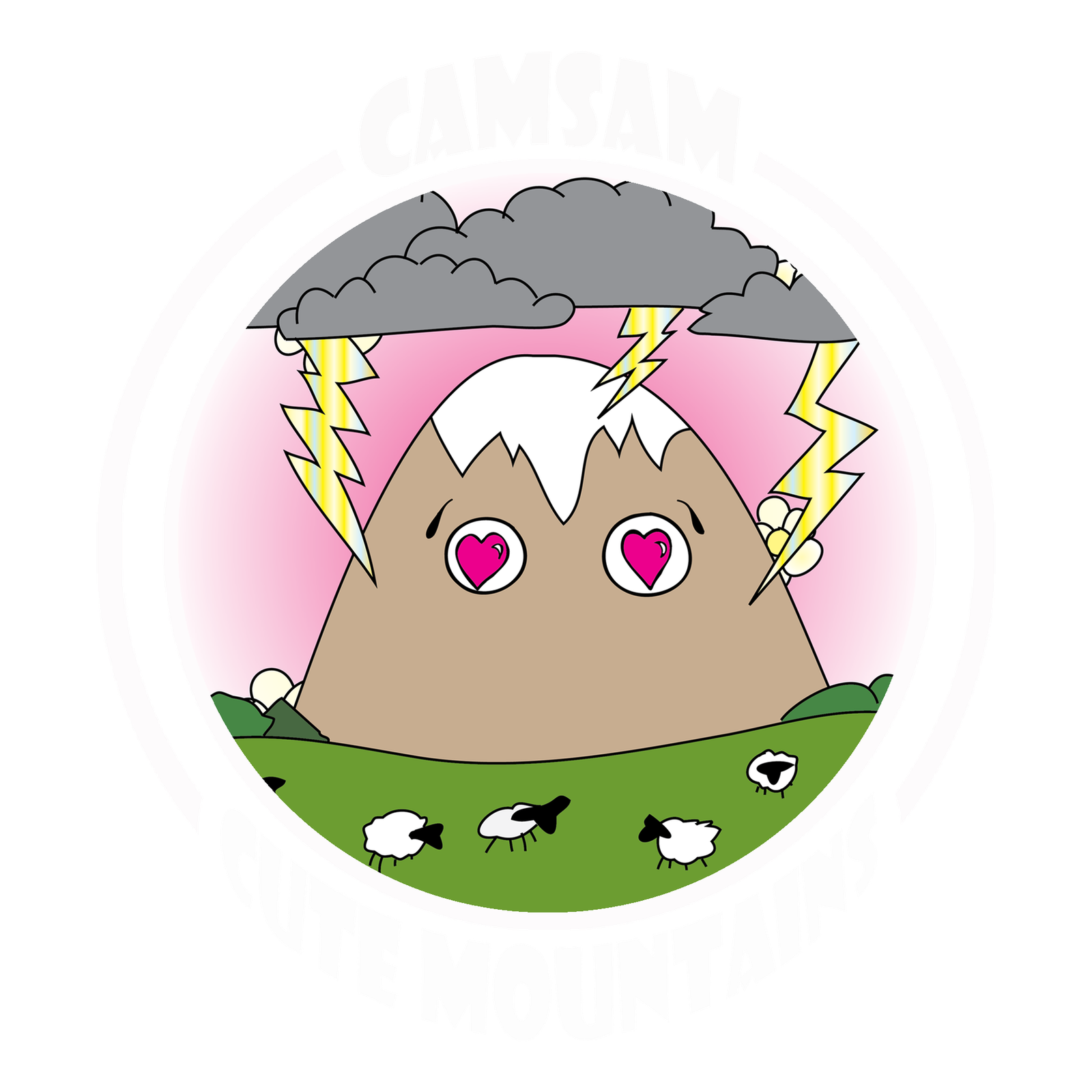
This is Cute Mountain #1 — a real NFT on the Avalanche blockchain. The image is a piece of pixel art, but what makes it an NFT is the on-chain record: token ID 1 in smart contract 0xeec4...E98a, with a specific owner, a set of traits, and metadata that points to this image.
NFTs can represent anything: artwork, music, video clips, game items, event tickets, domain names, or even legal documents. The token itself does not contain the media file — it contains a pointer (called a tokenURI) to the metadata, which in turn points to the image or asset. The blockchain records who owns the token and the history of every transfer.
How do NFTs work on the blockchain?
Every NFT lives inside a smart contract — a program deployed on a blockchain that manages a registry of tokens and their owners. When someone creates (mints) an NFT, the contract assigns a new token ID and records the owner's wallet address. This record is public, permanent, and verifiable by anyone.
The Cute Mountains collection is a single smart contract on Avalanche's C-Chain. You can view it directly on Snowscan, a block explorer that lets anyone inspect on-chain data. The contract follows the ERC-721 standard, which defines functions like ownerOf (check who owns a token), transferFrom (send a token to another wallet), and tokenURI (find the metadata).
Each token has a tokenURI that points to a JSON file containing the NFT's metadata. Here is the actual metadata for Cute Mountain #1, served from cutemountains.com/images/1.json:
{
  "name": "#1",
  "description": "This NFT is part of the 'CuteMountains' collection.",
  "image": "https://cutemountains.com/images/1.png",
  "edition": 1,
  "attributes": [
    { "trait_type": "Season",      "value": "Sunset" },
    { "trait_type": "Mountain",    "value": "Montane rainforest" },
    { "trait_type": "Foreground",  "value": "Sheep" },
    { "trait_type": "Eyes",        "value": "Happy" },
    { "trait_type": "Sky element", "value": "Sun" }
  ]
}
The image field points to the actual artwork. The attributes array describes the five traits that make this mountain unique. Marketplaces like OpenSea and Joepegs read this JSON to display the NFT's properties alongside the image.
What does minting an NFT mean?
Minting is the process of creating a new NFT on the blockchain. It is the moment a token goes from not existing to being permanently recorded in a smart contract with an assigned owner. Minting costs a small transaction fee called a "gas fee" paid to the blockchain validators who process the transaction.
When someone mints a Cute Mountain, the process works like this: they connect a crypto wallet to the mint page, click the mint button, and confirm the transaction in their wallet. The smart contract then assigns the next available token ID, records the wallet as the owner, and the tokenURI points to the pre-generated metadata and artwork for that number.
Cute Mountains uses sequential minting — you get the next number in line, not a specific token. This means minting is a discovery process: you do not know which combination of traits your mountain will have until the transaction completes. There are 7,776 possible mountains, and each combination of traits exists exactly once, so every mint reveals a unique piece of art that nobody has seen before.
On Avalanche, the gas fee for minting is typically a fraction of a cent. On Ethereum, the same operation can cost anywhere from a few dollars to hundreds of dollars depending on network congestion. This cost difference is one reason why many NFT projects deploy on alternative blockchains.
What makes each NFT unique?
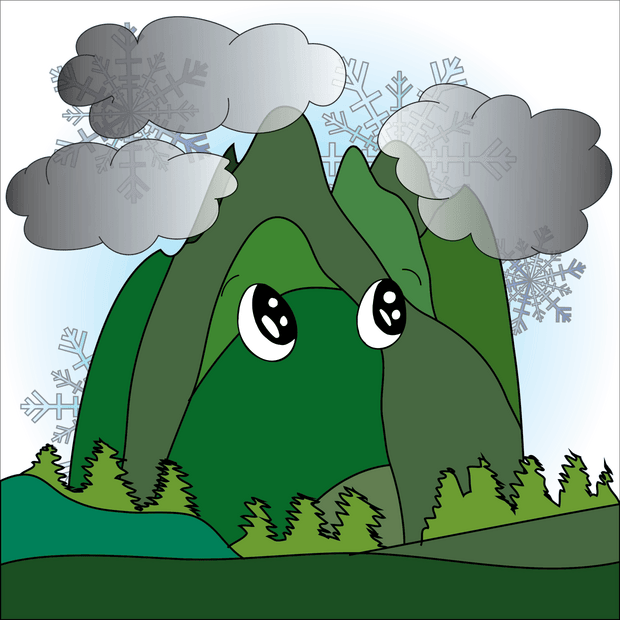
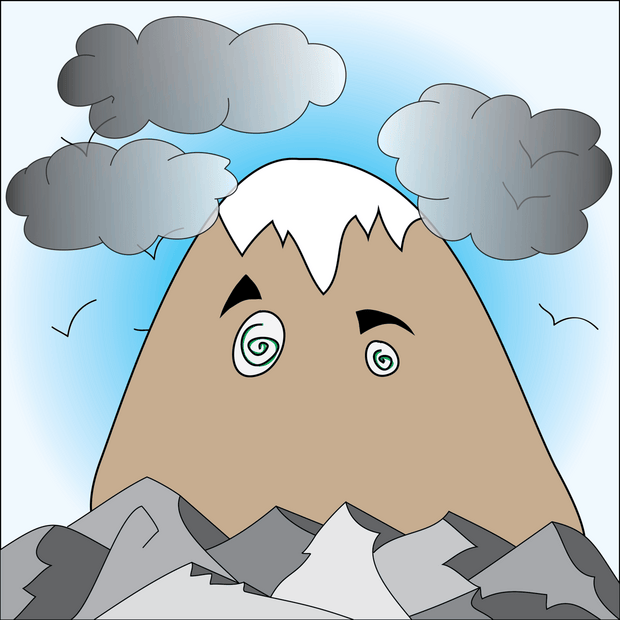
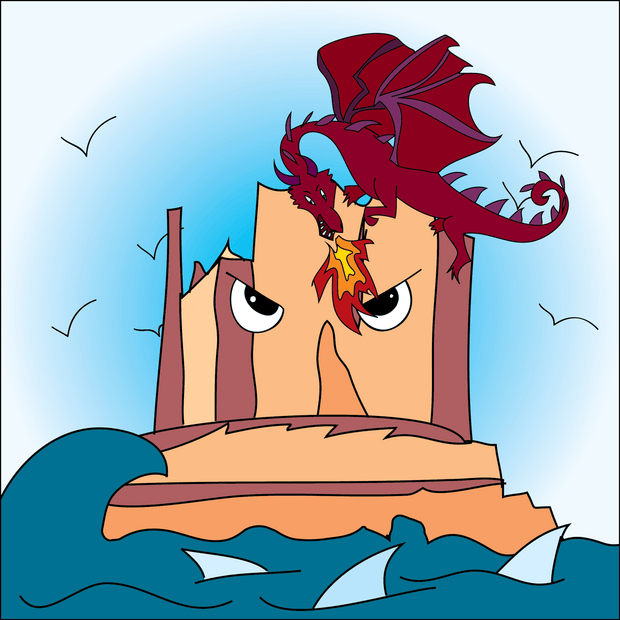
Every NFT has a unique token ID within its smart contract, but what gives generative collections their character is the trait system. Cute Mountains uses 5 trait categories, each with 6 possible values. The total number of combinations is 65 = 7,776, and every single combination exists exactly once.
#1
Sunset, Sheep, Happy
#100
Winter, Forest, Cute
#7334
Summer, Rocks, Confused
#635
Summer, Dangerous waters, Angry
Four Cute Mountains side by side — same collection, same contract, but each one is visually distinct because of its unique trait combination. Browse all 7,776 in the gallery.
This trait-based approach is common across generative NFT collections. Some traits are considered more desirable (rare) than others, creating a natural hierarchy within a collection. In Cute Mountains, every trait is equally distributed — each value appears in exactly 1,296 of the 7,776 mountains — so rarity comes from the combination rather than any individual trait.
Can't you just screenshot an NFT?
Yes, you can save the image. But the image is not the NFT. This is the most common misconception about non-fungible tokens, and it deserves a clear explanation.
An NFT is a record on a blockchain: a token ID, an owner address, and a pointer to metadata. The image is just one piece of that metadata. Saving the image to your computer gives you a copy of the file, but it does not change the blockchain record of who owns the token. You can photograph the Mona Lisa, but that does not make you the owner of the Mona Lisa. The same principle applies here — the ownership record is separate from the visual asset.
Anyone can visit the Cute Mountains contract on Snowscan and call the ownerOf function with any token ID to see exactly which wallet address owns it. This verification is independent, public, and requires no trust in any central authority. That verifiability — not the image file — is what an NFT provides.
Whether that verifiable ownership has value is a separate question, and one that the market answers differently for different collections. But the technical mechanism — a public, immutable record of who owns what — is robust and well-understood.
Why do NFTs exist on different blockchains?
NFTs originally launched on Ethereum, which pioneered the ERC-721 standard in 2018. But Ethereum's popularity creates a problem: when many people use the network simultaneously, gas fees spike and transactions slow down. This led to the development of alternative blockchains, each offering different tradeoffs.
Cute Mountains is deployed on Avalanche, a blockchain that offers sub-second transaction finality and gas fees that typically cost fractions of a cent. By comparison, minting an NFT on Ethereum during peak congestion can cost $50-200 in gas alone. The tradeoff is ecosystem size: Ethereum has more users, more marketplaces, and more liquidity. Avalanche has a smaller but growing ecosystem with lower barriers to entry.
Other popular NFT blockchains include Solana (known for high throughput and low fees), Polygon (an Ethereum scaling solution), and Base (a newer chain built by Coinbase). Each chain has its own marketplaces, wallets, and communities. The choice of blockchain is a foundational decision for any NFT project — it determines cost structure, speed, available tools, and audience reach.
Are NFTs still relevant in 2026?
The honest answer is: it depends on what you mean by "NFTs." The speculative frenzy of 2021-2022, where people flipped profile pictures for thousands of dollars, has largely subsided. Trading volumes dropped dramatically in 2023-2024. Many collections that launched during the hype cycle have gone to zero.
But the underlying technology — verifiable digital ownership on a public ledger — remains sound and continues to find applications. Event ticketing, digital art provenance, gaming assets, music rights, and identity verification all use NFT infrastructure in 2026, often without using the term "NFT" at all.
The projects that survived the correction tend to share common traits: genuine artistic merit, active communities, or real utility beyond speculation. Collections built purely on hype and promises of financial returns were the first to disappear.
Cute Mountains is a straightforward example. The collection was generated in 2021, deployed on Avalanche, and the artwork exists permanently on-chain through the smart contract and hosted metadata. There are no roadmap promises, no token economics, no Discord alpha groups — just 7,776 pieces of pixel art with verifiable ownership. Whether that appeals to you is a matter of personal taste, not market speculation.
About the author
Cute Mountains is a collection of 7,776 unique pixel-art mountain NFTs deployed on Avalanche in 2021. This guide was written from first-hand experience building, deploying, and maintaining an NFT collection — from smart contract deployment to metadata hosting.
Disclosure: This guide was written by the Cute Mountains team, who have a financial interest in the NFT ecosystem. The information provided is educational and should not be considered financial advice.
Frequently asked questions
How much does an NFT cost?
NFT prices range from fractions of a cent to millions of dollars. The price depends on the collection, demand, perceived artistic or cultural value, and the blockchain it lives on. Most NFTs are affordable — the expensive headline-grabbing sales represent a tiny fraction of the market.
How do I buy an NFT?
You need a crypto wallet (like MetaMask or Core) with some cryptocurrency on the right blockchain. Then visit an NFT marketplace like OpenSea or Joepegs, connect your wallet, and either buy at a listed price or place a bid. Some collections also let you mint directly from their website.
Are NFTs a good investment?
Most NFTs lose value over time. The 2021-2022 bull market saw speculative prices that collapsed in 2023-2024. Some projects retained value through strong communities, cultural significance, or genuine utility. Treat NFTs as collectibles or art rather than financial investments unless you understand the risks.
What is an NFT marketplace?
An NFT marketplace is a platform where users can buy, sell, and discover NFTs. OpenSea is the largest multi-chain marketplace. Joepegs and Campfire serve the Avalanche ecosystem. These platforms handle the blockchain transaction details, making it easier for users to trade without writing code.
Can NFTs be stolen?
The blockchain record itself is secure, but NFTs can be stolen through phishing attacks, malicious smart contracts, or compromised wallet keys. The most common attack vector is tricking users into signing a transaction that transfers their NFTs. Never sign transactions from untrusted sources, and use a hardware wallet for valuable holdings.
What is the most expensive NFT ever sold?
Beeple's "Everydays: The First 5000 Days" sold for $69.3 million at Christie's in March 2021. CryptoPunk #5822 sold for $23.7 million in February 2022. These headline sales drove mainstream awareness but represent extreme outliers, not typical NFT prices.
Glossary
- Blockchain
- A distributed digital ledger that records transactions across many computers. Each block contains a batch of transactions and links to the previous block, forming an immutable chain. Ethereum, Avalanche, and Solana are popular blockchains for NFTs.
- Smart contract
- A program stored on a blockchain that executes automatically when conditions are met. NFT collections are smart contracts that track who owns each token and handle transfers between wallets.
- Token
- A digital asset recorded on a blockchain. Fungible tokens (like cryptocurrencies) are interchangeable. Non-fungible tokens (NFTs) are unique — each one has a distinct identity and owner.
- Minting
- The process of creating a new NFT on the blockchain. When you mint, you send a transaction to the smart contract, which assigns a new token ID to your wallet. The token and its metadata are permanently recorded on-chain.
- Gas fee
- A transaction fee paid to blockchain validators for processing your request. Gas fees vary by network congestion and blockchain. Avalanche typically has lower gas fees than Ethereum.
- Wallet
- Software that stores your private keys and lets you interact with blockchains. MetaMask and Core are popular browser-extension wallets. Your wallet address is your public identity on the blockchain.
- Metadata
- The data associated with an NFT — its name, description, image URL, and attributes (traits). Metadata can be stored on-chain, on IPFS, or on a web server. It tells marketplaces and applications what the NFT looks like and what properties it has.
- ERC-721
- The Ethereum token standard that defines how NFTs work. It specifies functions like ownerOf (who owns a token), transferFrom (send a token to someone), and tokenURI (where to find the metadata). Most NFT collections on Ethereum and compatible chains implement ERC-721.
- Fungible
- Interchangeable and identical in value. One dollar bill is fungible with any other dollar bill. One Bitcoin is fungible with any other Bitcoin. The opposite of non-fungible.
- Non-fungible
- Unique and not interchangeable. A painting, a concert ticket with an assigned seat, or a specific NFT with a unique token ID are non-fungible — each one is distinct from all others.
מוכנים לראות NFT מקרוב?